Skip to content

TechOrbits pneumatic converter on an aluminum frame

A pneumatic squeeze-handle converter on an aluminum frame, rated to 33 lb — and the only listing on this shelf that names the material of its own work surface.

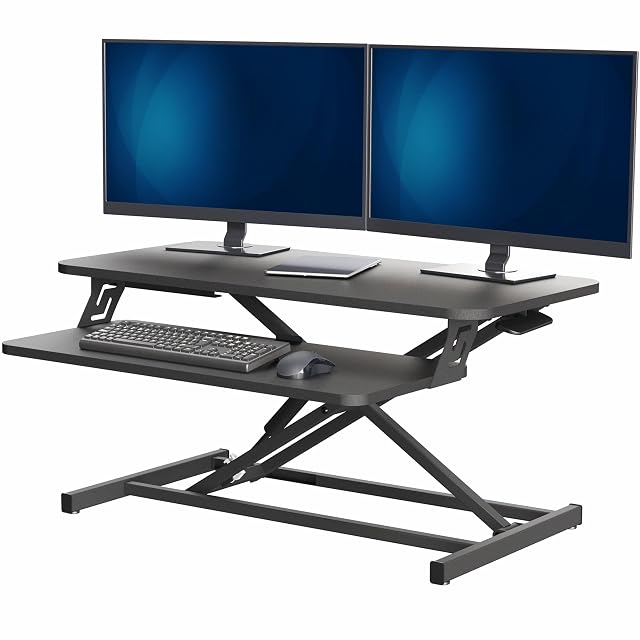
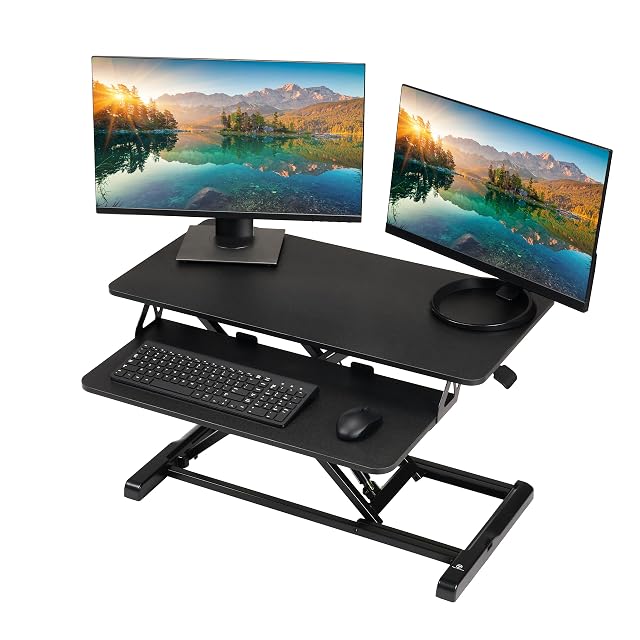
TechOrbits black 32 inch standing desk converter with its keyboard tray

TechOrbits pneumatic converter on an aluminum frame

  • States the top is particle board on an aluminum frame — the only material statement on this shelf
  • A pneumatic lift worked by squeezing a handle, rather than by lifting against a spring
  • Particle board is the cheapest work surface material and the one most easily damaged by moisture

Best for: A converter adjusted several times a day, where a squeeze handle beats a spring you fight.

≈ $130
Check price on Amazon
Specifications

Amazon reference
B0828B7GNG
EAN
0662578127604
Manufacturer reference
OF-S05-1
Width
32 in (81 cm); depth not published
Height range
4.3–19.7 in (11–50 cm)
Load
33 lb (15 kg); no separate tray rating
Lift
Pneumatic, squeeze handle
Materials
Particle board top, aluminum frame
Assembly
Mostly assembled; keyboard tray fitted with the supplied tools

This listing contains one sentence that no other page on this shelf contains: the riser is “Built from particle board”, with a pneumatic lift and an aluminum frame holding up to 33 lb. The others do not say what their tops are made of; this one does.

The mechanism is the other difference. Where the spring-lift converters here are counterbalanced and lift when pulled, this one is pneumatic and worked by squeezing a handle — “Squeeze the handle and use your weight to adjust the height” — so the surface holds wherever it is released and the load on top does not have to be matched to a spring tension. For a desk where the equipment changes often, that is the easier mechanism to live with.

The published figures are good as far as they go: 4.3 to 19.7 in of travel, among the widest here, 33 lb of capacity, 32 in of width, and an aluminum frame rather than steel. What is missing is the depth of either surface and a separate rating for the keyboard tray — the SANODESK and ERGOMAKER on this shelf publish both, and the tray is always the weaker of the two. The tray goes on with the supplied tools; the rest arrives assembled.

Availability

Read on the day this page was built: $130 at the American Amazon shop.

Read from Keepa on the day this page was last revised; stock and price both move without notice.

What holds up, and what does not

Best for: A converter adjusted several times a day, where a squeeze handle beats a spring you fight.

Strengths

  • States the top is particle board on an aluminum frame — the only material statement on this shelf
  • A pneumatic lift worked by squeezing a handle, rather than by lifting against a spring
  • Publishes a 4.3 to 19.7 in range, among the widest here
  • Rated to 33 lb, matching the strongest two-tier converters in this hub
  • An aluminum frame rather than steel

Compromises

  • Particle board is the cheapest work surface material and the one most easily damaged by moisture
  • No surface dimensions published beyond the 32 in width
  • No separate rating for the keyboard tray, where three converters here give one
  • No weight published for the converter itself

Prices quoted in this text were read on 2026-10-13. The live price is at the top of the page.

What buyers ask us first

Does it matter that the top is particle board?

It matters for what happens in year three, not day one. Particle board takes a laminate well and is perfectly rigid under a monitor; it swells permanently if a drink goes over it and it does not hold a screw that has been removed once. The other listings here do not name their top material, so there is nothing to compare it with; this one at least says what it is.

Squeeze handle or spring lift?

A squeeze handle releases a pneumatic cylinder, so you guide the surface up and it holds wherever you let go; a spring-assisted riser is counterbalanced to the weight on it and lifts when you pull. The handle is easier when the load changes often, because the lift does not have to be re-tensioned. The spring converters here make the opposite argument: nothing in them can leak.

All desk converter risers