Skip to content

The best desk and under-desk trash bins for 2026

A bin that hangs from a drawer or desk edge keeps floor space clear underneath, which matters more on a standing desk or in a small home office than in a larger dedicated room. We compare mounting method (hook, clamp, or adhesive) and how securely it holds under repeated use, capacity against realistic daily office waste rather than a kitchen-bin volume, and standard liner bag compatibility versus a proprietary bag size.

What we recommend

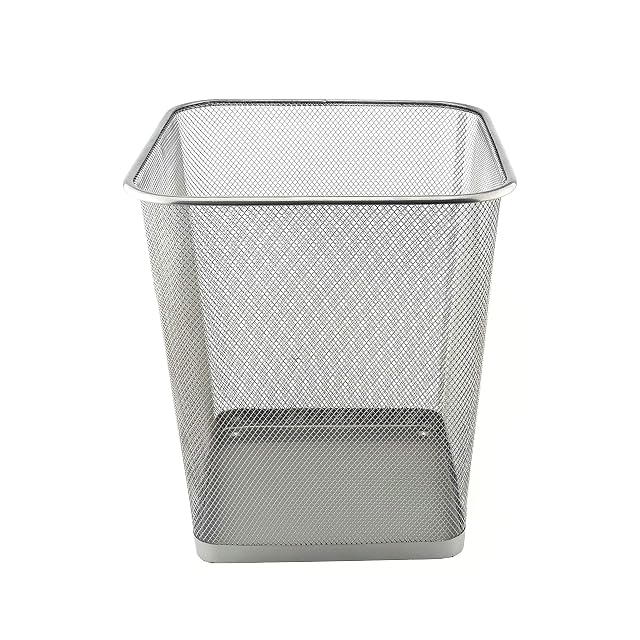
  1. D.RECT painted metal mesh office waste bin

    D.RECT 18L painted metal mesh waste bin

    An 18-litre painted metal mesh waste bin with a square, stable base, sized to reduce how often it needs emptying.

    Amazon reference
    B0845FZC1S (identical on 6 markets)
    EAN
    5902308729025
    • Sizeable 18-litre capacity reduces how often the bin needs emptying
    • Painted metal mesh construction is durable and water-resistant
    • Larger footprint than a compact under-desk bin

    Best for: An office desk generating a genuine volume of paper waste, where a larger capacity means less frequent emptying.
    Check price on Amazon
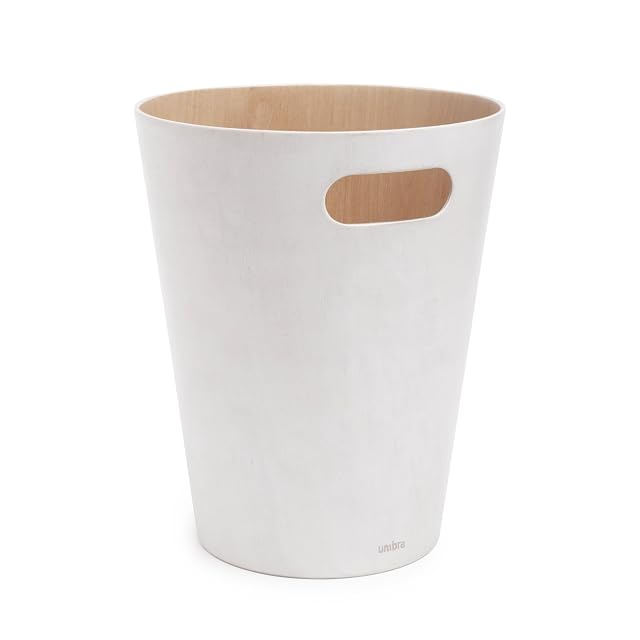
  2. Umbra Woodrow wood waste bin in a home office

    Umbra wood waste bin with natural interior

    A compact 7.5-litre treated wood waste bin with a natural interior finish and integrated carry handles, designed to double as home decor.

    Amazon reference
    B009IQAM96 (identical on 6 markets)
    EAN
    0028295383370
    • Treated wood construction with a natural interior, distinct from typical plastic or metal bins
    • Integrated handles make carrying and emptying genuinely easier
    • 7.5-litre capacity is notably smaller than the metal mesh bin elsewhere in this hub, meaning more frequent emptying

    Best for: A design-conscious home office where the bin itself should look intentional rather than purely utilitarian.

    Check price on Amazon

Who each type suits

Paper
That is most of what a desk bin holds. An open format is enough, with no lid or mechanism.
Shared office
One bin per workstation avoids constant trips. It is also what guarantees it gets used.
Sorting
Two small bins separate paper from the rest. A single bin makes sorting impossible downstream.

The trade-offs to weigh

Volume against space under the desk
A bulky bin overflows less often and gets in the feet's way. The format's central trade-off.
Open against lidded
An open bin is used without thinking; a lid contains odours and has to be handled every time. For paper, the lid is pointless.
With a liner against without
A liner makes emptying easy and has to be replaced constantly; a bare bin is emptied directly and gets dirty.

Questions buyers ask

What size for a desk?

Small enough to slide under the desk without getting in the feet's way, big enough not to overflow every day. The usable volume is modest.

Do I want a lid?

For paper, no: it slows the use down without adding anything. The lid serves when food waste ends up in there.

Where should it go?

Reachable without standing or contorting, out of the legroom. A badly placed bin does not get used.

Do I need a liner?

It simplifies emptying and becomes a consumable. A bare bin is emptied directly and cleaned from time to time.

How do I sort at a desk?

Two small bins separate paper from the rest at source. Sorting a mixed bin downstream never happens.

Metal or plastic?

Metal holds indefinitely and dents; plastic cracks on impact and costs less. On a bin, the difference is mainly aesthetic.

Do I want a heavy model?

A light bin tips at the slightest kick. A weighted bottom or a wide base settles the problem.

What to remember

A badly placed bin does not get used: reachable without standing, out of the legroom. The lid only serves if food waste ends up in there, and two small bins sort at source — which no downstream sorting makes up for.