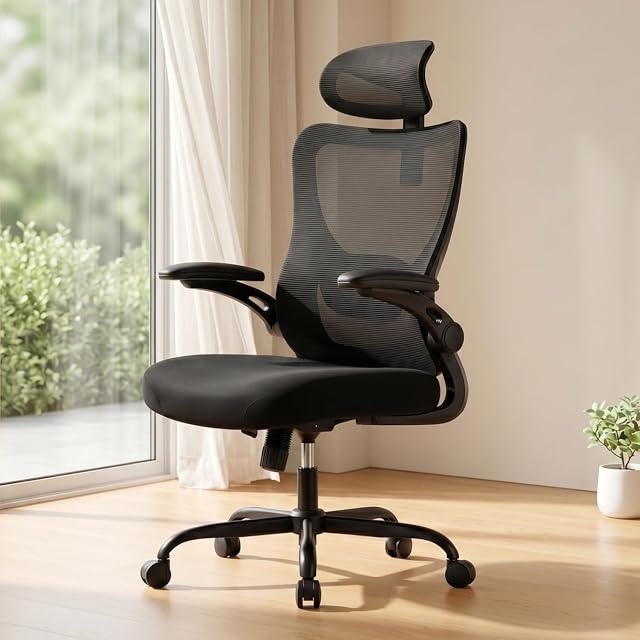
Start with the chair, not the desk. Every other decision — desk height, monitor height, whether you need a footrest — depends on where your eyes and elbows land when you sit properly. Buying a desk first means guessing at those numbers. The ergonomic office chairs hub compares seat height ranges, lumbar adjustment and armrests; chair or desk first covers the budget question.
Set the chair before measuring anything. Seat height so your feet rest flat with your knees at roughly a right angle; armrests low enough that your shoulders relax rather than lift; lumbar support at the curve of your lower back. Note your elbow height at this setting — it is the desk height you need.
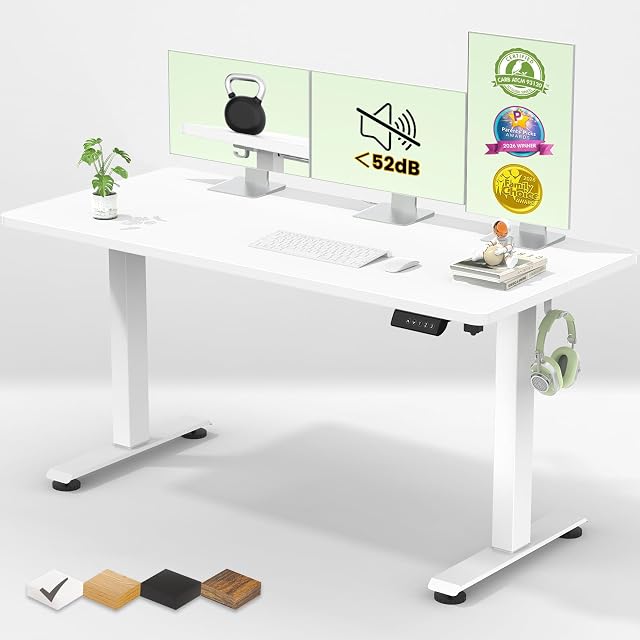
Then the desk, at your elbow height. A fixed desk that matches it is fine. If it does not, or you want to stand for part of the day, the electric standing desks hub compares height ranges and load ratings — the VEKEN, for instance, reads about $110 on Amazon.com.
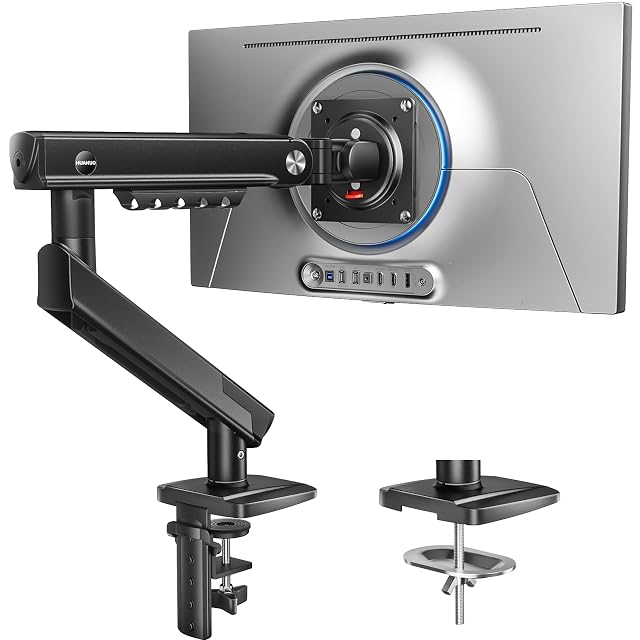
Then the screen. Sitting at the desk, check where your eyes fall on the monitor. If the screen is too low, the fix is a monitor arm or a monitor riser, not a new desk; mounting a monitor arm correctly walks through the installation.
Accessories last, and only for a problem you have found. A footrest solves a desk too high for your legs once the chair is set; a wrist rest cushions the pause between typing, not the typing itself; a desk lamp fixes a screen with a dark room around it. Buying any of them before the problem appears means guessing.
Cables at the very end. Route them once the furniture and the screen positions are final — routing cables under a standing desk covers the moving case. Doing it earlier means doing it twice.
Prices quoted in this text were read on 2026-10-13. The live price is at the top of the page.
What buyers ask us first
What should I buy first?
The chair. Desk height, monitor height and whether you need a footrest all depend on where your eyes and elbows land once you sit properly, and the chair decides that.
Do I need a standing desk on day one?
No. A fixed desk with a well-set chair covers most of what a new home office needs; a standing desk is worth adding once you know your working rhythm. Chair or desk first covers the budget question in more detail.
How high should the monitor be?
As a common rule of thumb, with the top of the screen at or slightly below eye level and about an arm's length away, so you look slightly down at the middle of it. If the screen sits lower than that, a monitor arm or riser fixes it without changing the desk.
When do I need a footrest?
When the desk is too high for your chair to be set with feet flat: raising the seat to match the desk lifts your feet off the floor, and a footrest closes that gap.
Last reviewed 13 October 2026