Skip to content

CableGenie elastic-loop cable clips, three mounting options

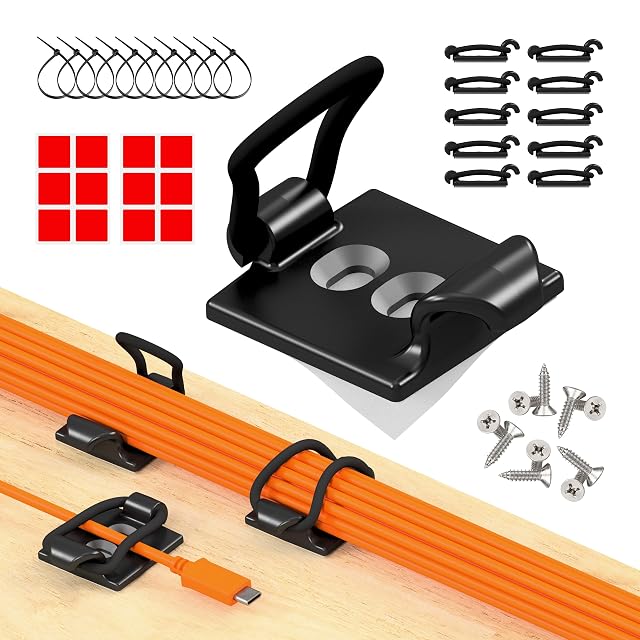
Ten elastic-loop clips with a 1 by 1 in base, mountable by adhesive, screw or zip tie, taking a bundle up to an inch across and reopening as often as you like.

CableGenie black cable clip with a white elastic loop holding a bundle of cords

CableGenie elastic-loop cable clips, three mounting options

  • Three mounting options in one pack — adhesive pads, screws, or zip ties for a furniture leg
  • Twelve adhesive pads for ten clips, so two can be repositioned after a mistake
  • The most expensive per-piece fastener in this hub — ten clips for about $22, where the kits here give thirty-six or forty-six clips for about $16

Best for: A setup that changes, on a surface where adhesive is not trusted and a screw is allowed.

≈ $22
Check price on Amazon
Specifications

Amazon reference
B0GHP439B2
EAN
5070003261741
Pieces
10 clips, 12 adhesive pads, 10 screws, 10 zip ties
Bundle size
Up to 1 in (25 mm) across
Base
1 × 1 in (25 × 25 mm)
Material
ABS hook, silicone elastic loop
Mounting
Adhesive, screw or zip tie
Made in
Somerset, UK

This hub compares three things, and the third is whether a fastener can be reopened and moved as a setup changes. This is the clearest answer on the shelf: a hook with a silicone elastic loop that stretches over a bundle up to an inch across and comes off as many times as you like.

The pack is thought through in a way the big mixed kits are not. Ten clips, twelve adhesive pads — two spare, explicitly for repositioning — ten screws and ten zip ties, so the clip can be stuck to a desk, screwed to a solid surface, or tied round a chair leg or a table frame where no pad would hold. The base is published at 1 by 1 in and the body is impact-resistant ABS designed to work with one hand.

What you pay for is pieces: ten fasteners at about $22, against about $16 for the 192-piece N NOROCME kit in this hub. The honest comparison is that the kits give you volume and single-use ties, and this gives you ten mounts that will outlive several desk rearrangements. Two claims on the page are unverifiable and worth naming as such — that the maker “tested over 30 types” of adhesive, with none named, and the “UPGRADED 2026” badge, which tells you when the listing was written rather than what the clip does.

Availability

Read on the day this page was built: $22 at the American Amazon shop.

Read from Keepa on the day this page was last revised; stock and price both move without notice.

What holds up, and what does not

Best for: A setup that changes, on a surface where adhesive is not trusted and a screw is allowed.

Strengths

  • Three mounting options in one pack — adhesive pads, screws, or zip ties for a furniture leg
  • Twelve adhesive pads for ten clips, so two can be repositioned after a mistake
  • The elastic loop is reusable indefinitely, which is this hub’s third comparison answered outright
  • Publishes the base size, 1 by 1 in, and the bundle it takes, up to 1 in diameter
  • Impact-resistant ABS body designed for one-handed use; made in the UK by the maker

Compromises

  • The most expensive per-piece fastener in this hub — ten clips for about $22, where the kits here give thirty-six or forty-six clips for about $16
  • A 1 in bundle is the published limit, which rules out a monitor lead and a power brick together
  • A claim to have tried over thirty adhesive types, with no product named and no figure behind it
  • "UPGRADED 2026" dates the listing rather than describing the clip

Prices quoted in this text were read on 2026-10-12. The live price is at the top of the page.

What buyers ask us first

Why three mounting methods?

Because the surface decides, and this hub’s introduction is about surfaces. The adhesive pads cover a smooth desk or wall; the screws cover a case where adhesive has already failed or where the load is real; the zip ties cover round and irregular objects — the listing names furniture legs and music stands, which no pad will hold. Having all three in the pack means a wrong guess about the surface is not a wasted purchase.

What makes the loop different from a tie?

It goes back. A zip tie is cut off to change a bundle and a hook-and-loop strap wears out; a silicone elastic loop stretches over the hook and comes back off as often as needed. CableGenie frames it against waste — the loop "allows you to swap and change your cables as much as you want without the waste of traditional single-use zip ties" — and in this hub, where one kit includes a hundred nylon ties, that is the distinction the shelf is built to compare.

All cable management